Things a Veterinarian Told Me on a Hike
A friend of mine is a veterinarian doing his PhD in something with milk. On a hike last year, I asked him why you can buy buttermilk when hiking in the Austrian alps at every alp, but not milk.
He gave a very detailed answer.
The others on the hike quietly moved ahead. You know the type. The guy at a party who explains every regional train model operating in the greater Cologne area. Except this one was doing his PhD about milk, and I stayed, because it was actually interesting.
At some point he mentioned that one in twelve packs of smoked salmon in German supermarkets has detectable listeria,1 one of the deadliest pathogens in the food supply. And that it’s not from the fish. It’s from the slicing machine.
I know nothing about food safety. I’m the person who googles “do I really have to throw away leftovers after three days” at midnight. That conversation sent me down a research rabbit hole I haven’t fully recovered from.
I did not expect it to get worse. It got worse.
The danger isn’t in the food. It’s in the slicing machine.
The contamination in that smoked salmon doesn’t come from the fish. It comes from the machines that slice it.
Most people have heard of salmonella. Few have heard of listeria. Which is odd. Of the people sick enough to be diagnosed, 20 to 30% die. Salmonella kills 0.03%.2 That makes listeria roughly 600 times more lethal per infection.
When cleaning misses a few bacteria, the survivors attach to the slicing machine’s steel and build a biofilm, a protective layer that standard cleaning can no longer penetrate.3 A contaminated slicer doesn’t stop. In one study, a contaminated slicer at high bacterial loads transferred listeria to every one of thirty consecutive slices.4 And not just in German supermarkets. Global contamination rates for smoked fish run higher.5
If you’re a healthy adult, listeria probably means a day of diarrhea you never think twice about. You won’t know it was listeria. The incubation period goes up to 70 days.6 But in some cases the bacteria doesn’t stay in your gut. It enters your bloodstream. It reaches your brain. You could eat contaminated salmon in January and be in a hospital in March. By then you have no idea what made you sick. You blame whatever you ate last night.
So the slicing machines are the problem. Can’t we just clean them better?
Yes. If you can afford it.
The natural answer is: forget the industrial slicing machines. Small farms. Traditional methods. There is a romantic version of this problem where that’s the solution. The signs at the Austrian alps say they’ve been making buttermilk for three hundred years.
Except the economics don’t work that way.
Small farms spend 6.0% of their revenue on food safety compliance. Large farms spend 0.9%.7 The knowledge isn’t the problem. Proper biofilm prevention requires dedicated resources: trained staff, testing equipment, automated systems, constant monitoring. The financial burden to survive a recall on top of that. These are fixed costs. They don’t scale down.
The costs are real. So are the consequences when they fail.8 In 1917, bovine tuberculosis killed 15,000 Americans a year,9 mostly children. Most got it from milk. Pasteurization fixed that.1011
Nobody dies of tuberculosis from milk anymore. Not in any country with mandatory pasteurization.
But even if every farm could afford perfect safety protocols, would we require the same ones? No. Because the limits themselves are negotiable.
Science measures the risk. Culture decides what risk to accept.
In American movies, the eggs are always in the refrigerator. In Germany, they sit on the shelf.12
The reason is chlorine. The US washes eggs in a chlorine rinse, which kills bacteria on the shell but strips the protective film. Without it, refrigeration becomes mandatory. The EU vaccinates hens instead. It costs more, but it leaves the film intact and skips the wash.
I used to find it disgusting that Americans washed their chicken in chlorine. They’ve since switched to a different chemical. The EU doesn’t allow either.13
Then I realized: European tiramisu calls for raw eggs. So does mayo. So does Caesar dressing. For an American who has learned their entire life that raw eggs are dangerous, this must be equally disgusting.
Neither country is wrong. Each solved the same problem differently.
Europe tolerates listeria because it loves cheese. The kind that by law must be made from raw milk. Roquefort. Camembert. Gruyère.14
America tolerates salmonella because cheap chicken is more important than the alternative.15 Each culture accepts the pathogen its food traditions require.
These are not contradictions. These are choices.
Both systems produce deaths every year. From listeria alone: 335 in the EU in 2023. 260 in the US.16 Different rules. Same funerals.
EU regulation requires zero listeria when food leaves the factory. By the time it reaches your store shelf, 100 colony-forming units per gram is perfectly legal.17 Bacteria grow in transit. Someone calculated how much, and called that number safe enough.
The system is calibrated for healthy adults. For most of us, it works. The people who die are overwhelmingly the elderly, pregnant, and immunocompromised.16
The number of people we are willing to let die so I can eat blue cheese today is 335 a year. In the EU.
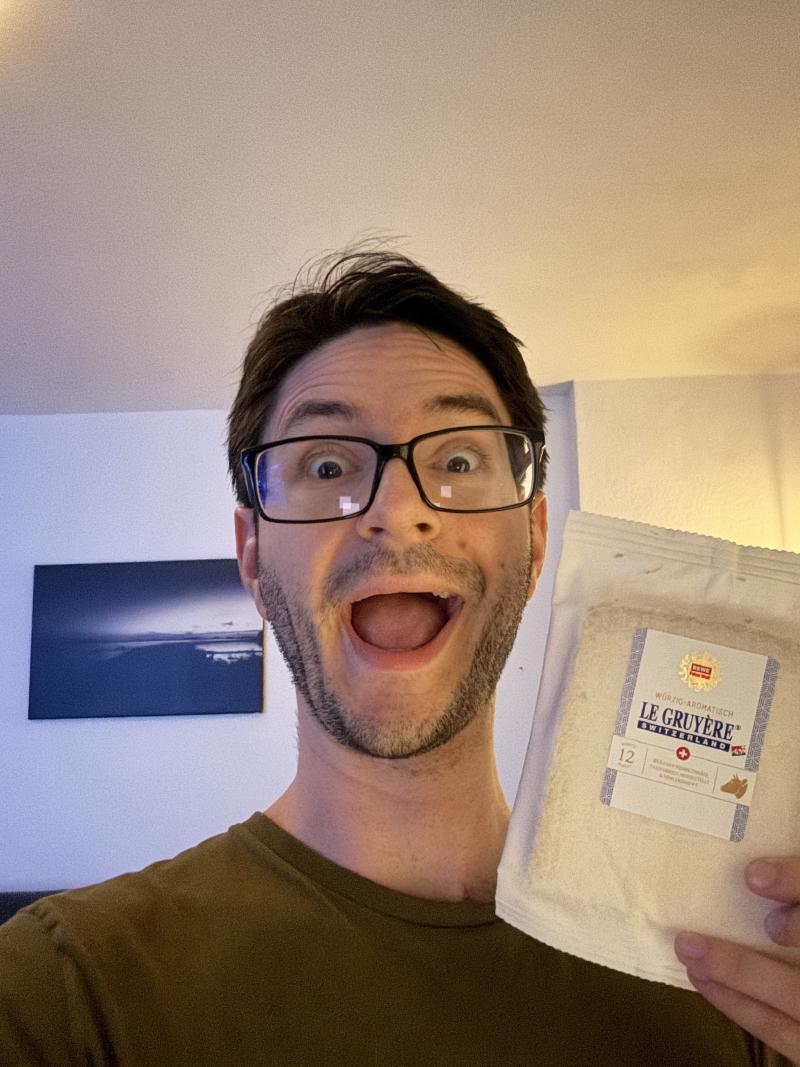
I saw him again a couple of weeks later. “Thanks for the rabbit hole.”
He sent me two or three articles. One about the baby formula recall.18 The contamination wasn’t bacteria. It was a toxin that survived the heat treatment meant to kill it.
After that, we ran into each other a few times. Every time, I wanted to bring it up again. But we were always in groups, and I could feel the conversation starting to clear the room.
You know the type.
I learned about the difference between salmonella and listeria. How Europe tolerates pathogens America forbids. How America tolerates pathogens Europe forbids. Why eggs are in the refrigerator in one country and the shelf in another.
I changed one thing. I put food into the fridge faster.
I ate smoked salmon while writing this. Statistically, I’m fine. Probably.
BVL Zoonosen-Monitoring 2023. 354 samples of cold-smoked sliced salmon tested. 8.2% positive for Listeria monocytogenes. One sample exceeded the legal limit. (BVL Press Release, Full Report PDF) ↩︎
Invasive listeriosis: case fatality rate 20-30%. Listeria causes 0.1% of foodborne illness cases but 28% of foodborne deaths in the US. Rare. Precise. Devastating. (CDC Clinical Overview, CDC Burden of Foodborne Illness) ↩︎
Biofilms are bacterial cities. They build protective walls and survive sanitizer concentrations that kill 99.999% of free-floating bacteria. Your kitchen sponge probably has one. (source, source) ↩︎
Vorst et al., Journal of Food Protection, 2006. At the highest contamination level (10^8 CFU per blade), every one of thirty consecutive slices tested positive. At lower levels, transfer dropped off earlier. (source) ↩︎
Listeria contamination rates in smoked and ready-to-eat fish consistently exceed those in other ready-to-eat food categories globally. (PMC, EFSA) ↩︎
The median incubation period is 11 days. For pregnancy cases, 27.5 days. The maximum: 70 days. Epidemiologists call this “catastrophically long.” (source) ↩︎
USDA ERS 2018. Small farms know what needs to happen. They just can’t pay for it. (source) ↩︎
Enterprise Foods, South Africa, 2017-2018: 216 dead. The deadliest listeria outbreak in recorded history (WHO). Jensen Farms, Colorado, 2011: 33 dead from contaminated cantaloupes (CDC). Boar’s Head, Virginia, 2024: 10 dead, 61 hospitalized. The plant had 69 food safety violations before the outbreak (FSIS Investigation). ↩︎
Before mandatory pasteurization, milk was the primary route for bovine tuberculosis transmission to humans. Children were disproportionately affected. (PMC, Colorado State) ↩︎
Louis Pasteur invented pasteurization in 1865. Not for milk. For wine. ↩︎
Olmstead and Rhode, Journal of Economic History, 2004. Pasteurization reduced milk-borne tuberculosis deaths by over 90% within two decades of widespread adoption. (Cambridge Core) ↩︎
The US washes eggs in a chlorine rinse, which removes the natural protective cuticle and requires refrigeration. The EU vaccinates hens against salmonella and leaves the cuticle intact, so eggs sit at room temperature. Same problem. Opposite engineering. (USDA ARS, FSIS) ↩︎
The US poultry industry used chlorine rinses for decades. Current practice uses peracetic acid as the primary antimicrobial wash. The EU bans chemical decontamination of poultry, requiring pathogen reduction through process controls instead. (Journal of Food Protection, EU Reg 853/2004) ↩︎
Raw milk cheese in Europe. Roquefort requires Penicillium roqueforti cultures grown in raw sheep’s milk. Camembert de Normandie is legally defined as raw milk. Le Gruyère AOP must be made from raw milk by Swiss law; pasteurization is prohibited. The US bans most raw milk cheeses aged less than 60 days. (Qualigeo PDO, Le Gruyère AOP, FDA CFR Part 133) ↩︎
In 2024, the USDA proposed making salmonella an adulterant in raw poultry. The National Chicken Council called it “legally unsound” and warned it would raise prices (source). The proposal was withdrawn in 2025 (source). Denmark achieved near-zero salmonella starting in 1988; chicken costs about $6 per pound (PMC). ↩︎
335 people died from listeriosis in the EU in 2023 (EFSA Zoonoses Report). The CDC estimates 260 listeriosis deaths annually in the US (CDC). In Europe, listeria kills nearly 4x more people than salmonella (88 deaths). In the US, it’s the reverse. Different food cultures, different pathogen profiles. At least 90% of listeria deaths occur in the elderly, pregnant, and immunocompromised (CDC Vital Signs 2013). ↩︎ ↩︎
EU Regulation 2073/2005. Zero Listeria monocytogenes when food leaves the producer. By the time it reaches retail, 100 colony-forming units per gram is the legal limit. At fridge temperature, listeria doesn’t stop growing. It just slows down. Today’s safe level is next week’s problem. (EUR-Lex, source) ↩︎
In December 2025, Nestle recalled baby formula across 60 countries. A Chinese supplier had been shipping oil contaminated with cereulide for over a year. It was the largest recall in the company’s history. (C&EN, Nestlé official) ↩︎